


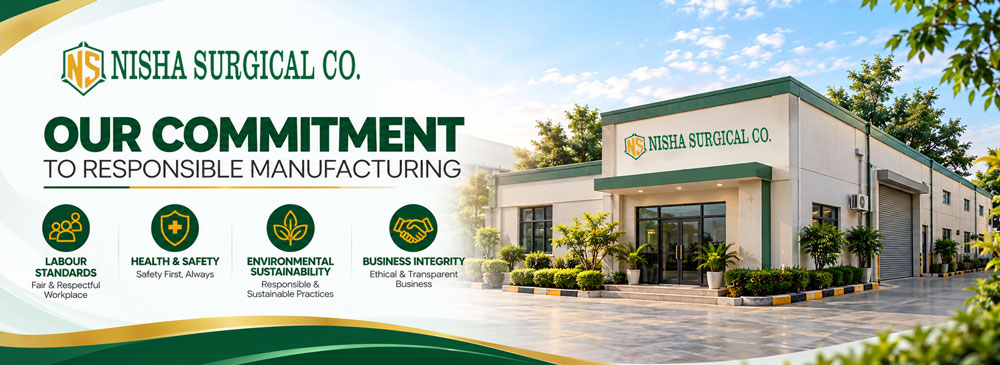
When people think about surgical instruments, they usually focus on quality, precision, durability, and performance. These are important considerations, but there is another side of manufacturing that deserves equal attention: the responsibility a company takes for its people, processes, and business practices.
At Nisha Surgical Co., we believe responsible manufacturing is an important part of building lasting relationships with healthcare professionals, distributors, and business partners around the world.
Based in Sialkot, Pakistan, our business operates in a region widely known for surgical instrument manufacturing. We understand that producing a quality instrument involves more than shaping metal or achieving a polished finish. It also requires attention to workmanship, production processes, workplace practices, and clear communication with customers.
Our commitment to responsible manufacturing at Nisha Surgical reflects the principles we believe should guide a professional manufacturing business: quality, accountability, workplace safety, environmental awareness, and business integrity.
These principles are relevant throughout the manufacturing process, from understanding product requirements to inspecting finished instruments and preparing orders for customers.
1. What Does Responsible Manufacturing Mean at Nisha Surgical?
Responsible manufacturing means considering more than the finished product. It also involves thinking about how products are made, how resources are used, how employees are treated, and how a company conducts its business.
For a surgical instrument manufacturer, these responsibilities are particularly important because customers need accurate product information, dependable communication, and instruments that meet their specified requirements.
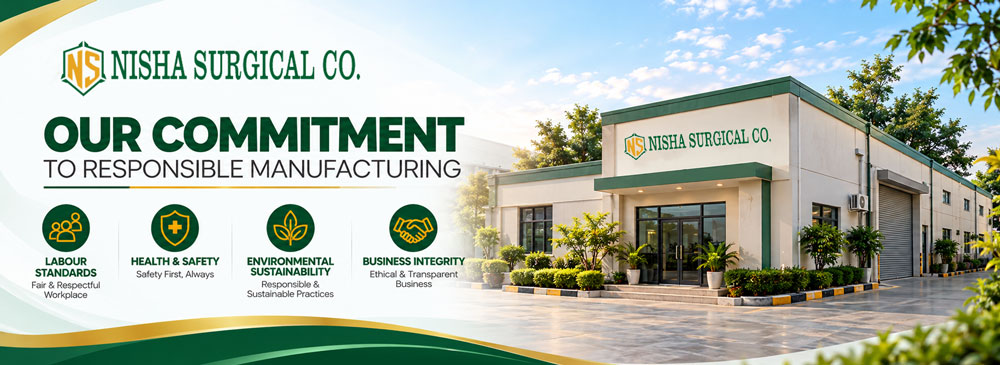
At Nisha Surgical, our responsible manufacturing approach focuses on four key areas:
- Labour standards and respectful workplace practices.
- Health and safety in manufacturing operations.
- Environmental sustainability and responsible resource use.
- Business integrity and transparent relationships.
Each area contributes to a broader understanding of responsible business operations.
We believe these principles should be reflected in everyday decisions rather than treated simply as statements on a company website.
2. Labour Standards: A Fair and Respectful Workplace
Behind every manufactured surgical instrument are people whose skills, attention, and experience contribute to the finished product.
From handling materials to carrying out production tasks and inspecting instruments, employees play an important role in manufacturing operations.
That is why responsible labour practices matter.
A professional workplace should encourage respectful communication, fair treatment, clear responsibilities, and appropriate working conditions. Employees should understand their roles and have access to the information and training needed to carry out their work safely and effectively.
3. Why Labour Standards Matter in Manufacturing
Manufacturing depends on people as much as it depends on equipment and processes.
When workplace expectations are clear and employees are treated respectfully, a company can create better conditions for communication, cooperation, and the development of practical skills.
Responsible employment practices also help establish a professional working environment where concerns can be addressed appropriately.
At Nisha Surgical, we recognize the importance of the people behind the products. Maintaining responsible workplace practices is an important consideration as we continue developing our manufacturing capabilities.
Our aim is to support an approach to manufacturing that values professional conduct, respect, and continuous development.
4. Health and Safety: Making Workplace Safety a Priority
Surgical instrument manufacturing can involve a range of activities, including machining, grinding, polishing, assembly, inspection, and packaging.
Each activity may present different workplace hazards, depending on the equipment, materials, and working conditions involved.
A responsible manufacturing operation needs to recognize these risks and apply suitable safety measures.
5. Practical Workplace Safety Considerations
Important areas to consider include:
- Identifying hazards associated with machinery and production activities.
- Providing appropriate protective equipment where necessary.
- Maintaining equipment and work areas.
- Training employees in relevant safety procedures.
- Keeping workstations organized and accessible.
- Reviewing incidents and identifying opportunities for improvement.
The appropriate measures depend on the actual manufacturing processes and applicable workplace requirements.
6. Environmental Sustainability: Using Resources Responsibly
Environmental responsibility is becoming an increasingly important consideration across manufacturing industries, including the healthcare supply chain.
Surgical instrument production may involve metals, energy, water, packaging, and manufacturing waste. How these resources are managed can influence both operational efficiency and environmental impact.
Responsible manufacturing involves identifying practical ways to use resources carefully and avoid unnecessary waste.
7. Business Integrity: Building Trust Through Honest Communication
Trust is one of the foundations of a lasting business relationship.
For surgical instrument manufacturers, business integrity involves more than responding to inquiries or sending quotations. It also means providing accurate product information, communicating requirements clearly, and handling business commitments professionally.
International customers need to understand what they are purchasing, which specifications apply, and what documentation may be available.
Clear communication helps both parties make informed decisions.
8. Why Transparency Matters to International Buyers
Importers and distributors often work with suppliers in different countries and regulatory environments.
They may need to confirm product dimensions, material specifications, packaging requirements, delivery arrangements, and relevant documentation before placing an order.
When information is clear and consistent, it becomes easier to evaluate a supplier and understand the requirements of a potential business relationship.
At Nisha Surgical, we recognize the importance of professional communication and transparent business practices.
Our goal is to build relationships through accurate information, realistic commitments, and a professional approach to customer service
9. How Responsible Manufacturing Connects With Surgical Instrument Quality
Responsible manufacturing and product quality are closely related, but they are not the same thing.
A company’s approach to workplace practices, environmental awareness, and business integrity provides useful context about how it operates. Product quality, however, must be evaluated against the relevant specifications, inspection criteria, and supporting documentation.
For surgical instruments, this distinction matters.
A customer may want to understand how a manufacturer approaches its business while also checking whether a particular instrument meets the required product specifications.
Both considerations are important when evaluating a supplier.
10. What Should Buyers Look for in a Surgical Instrument?
When assessing a surgical instrument, buyers may consider the following points.
1. Product Specifications
Confirm the instrument model, dimensions, design, material information, and other required characteristics.
2. Material Information
Review the specified material grade and supporting documentation where required. Avoid relying on general claims that do not identify the actual material.
3. Workmanship and Finish
Examine the instrument for visible defects, surface irregularities, or other issues relevant to the product specification.
4. Functional Checks
Depending on the instrument, appropriate checks may include joint movement, alignment, locking mechanisms, or other design-specific characteristics.
5. Quality Documentation
Ask the supplier for relevant inspection records, material information, declarations, or regulatory documents where applicable.
The precise requirements depend on the product, intended use, and destination market.
11. Why Continuous Improvement Matters
Manufacturing processes and customer expectations can change over time.
Reviewing inspection findings, customer feedback, production procedures, and operational performance can help a manufacturer identify areas that need attention.
Continuous improvement is most useful when it is based on actual observations, documented findings, and measurable objectives.
At Nisha Surgical, we recognize the importance of developing our manufacturing capabilities while maintaining attention to product requirements, workmanship, and customer needs
12. Table of Contents
13. Why Choose Nisha Surgical as Your Manufacturing Partner?
Choosing a surgical instrument supplier involves more than comparing prices or reviewing product photographs.
Buyers may need to evaluate manufacturing capabilities, product specifications, communication, quality documentation, and the supplier’s ability to understand their requirements.
At Nisha Surgical Co., we recognize the importance of these considerations when working with international customers and distributors.
14. Attention to Product Requirements
Clear product specifications help establish expectations before production and purchasing decisions are finalized.
Customers should have an opportunity to clarify important requirements, including dimensions, materials, product configurations, and applicable documentation.
15. A Focus on Workmanship
Surgical instruments require attention to detail during production and inspection.
Appropriate checks help determine whether an instrument meets its defined requirements and whether any issues need to be addressed.
16. Professional Communication
Clear communication helps customers understand product information, quotations, order requirements, and delivery arrangements.
It also provides a practical foundation for addressing questions before and after an order.
17. Responsible Business Relationships
Long-term business relationships benefit from accurate information, realistic commitments, and professional conduct.
A supplier should communicate what it can provide and clarify requirements that need further confirmation.
18. Continued Development
Manufacturing businesses need to review their processes and capabilities as customer requirements and industry expectations evolve.
Ongoing evaluation can help identify opportunities to improve production methods, communication, and operational practices.
We believe these principles provide a useful foundation for building long-term relationships with distributors, importers, and other business partners.
For products information, business inquiries, visit www.nishasurgical.com
#NishaSurgical #ResponsibleManufacturing #OurCommitmentToResponsibleManufacturing #SurgicalInstruments #SurgicalInstrumentManufacturer #SurgicalManufacturing #MedicalDeviceIndustry #QualityControl #WorkplaceSafety #EnvironmentalSustainability #BusinessIntegrity #EthicalManufacturing #SustainableManufacturing #HealthcareIndustry #MedicalInstruments #ManufacturingExcellence #QualityAssurance #HealthcareSolutions #SialkotPakistan #MadeInPakistan #SurgicalInstrumentSupplier #GlobalHealthcare #ManufacturingIndustry #BusinessPartnership #NishaSurgicalCo