


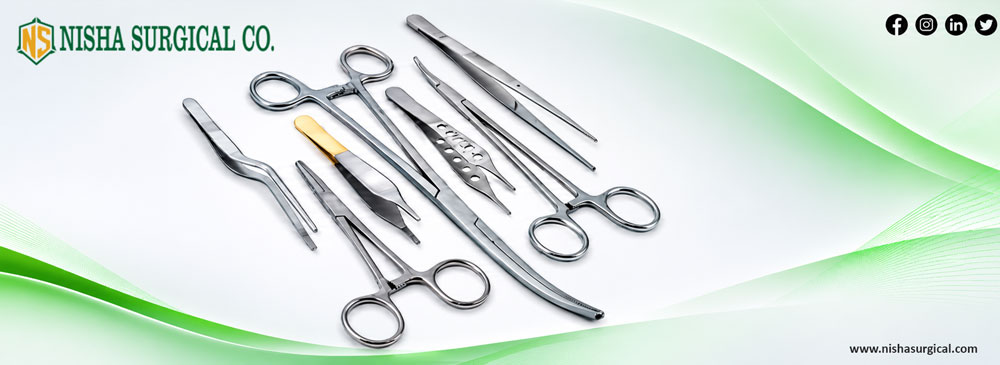
In modern healthcare, the quality and reliability of surgical tools play an important role in supporting medical professionals during different procedures. From routine clinical applications to specialized surgical environments, healthcare facilities depend on carefully designed equipment that offers dependable handling, durability, and consistent performance.
General Surgical Instruments are among the essential products used across hospitals, clinics, surgical centers, and healthcare facilities. These instruments include scissors, forceps, needle holders, retractors, clamps, and other tools designed for specific surgical applications.
At Nisha Surgical, we understand that international buyers need more than just products. They look for dependable manufacturing, consistent specifications, competitive wholesale opportunities, and professional communication. Based in Sialkot, Pakistan, Nisha Surgical focuses on providing surgical, dental, and beauty instruments to customers in international markets.
Our approach combines practical product design, material selection, careful manufacturing processes, and attention to finishing. Whether you are a medical distributor, wholesale importer, purchasing company, or healthcare supplier, understanding the available product range can help you make informed sourcing decisions.
This guide explores different types of General Surgical Instruments, their materials, important specifications, and considerations for international wholesale purchasing.
What Are General Surgical Instruments?
General Surgical Instruments are tools designed to support different surgical and clinical tasks. Depending on their design and intended application, they may be used for cutting, grasping, holding, retracting, clamping, and suturing.
These instruments are available in different shapes, sizes, configurations, and materials. Each design serves a particular purpose, which is why choosing the appropriate product is important for healthcare professionals.
A typical range of general surgical products includes:
- Surgical scissors
- Tissue and dressing forceps
- Hemostatic forceps
- Needle holders
- Surgical retractors
- Clamps and holding instruments
- Dissecting instruments
- General surgical sets
The exact product requirements depend on the intended application, professional preferences, and healthcare facility specifications.
For wholesalers and distributors, having access to a comprehensive product range makes it easier to serve different customer requirements through one reliable sourcing partner.
General Surgical Instruments Product Range at Nisha Surgical
At Nisha Surgical, we recognize that different buyers have different purchasing requirements. Some distributors focus on frequently requested individual instruments, while others purchase complete product ranges for hospitals, clinics, and healthcare supply companies.
Below are some important categories of General Surgical Instruments.
1. Surgical Scissors
Surgical scissors are commonly used for cutting sutures, dressings, and other materials according to their intended design.
They are available in different configurations, including straight and curved patterns. Blade length, tip shape, handle design, and cutting performance are important considerations when selecting a suitable model.
Common product variations include:
- Straight surgical scissors
- Curved surgical scissors
- Dissecting scissors
- Operating scissors
- Specialized cutting scissors
For wholesale buyers, it is important to check the available sizes, blade configurations, material specifications, and finishing quality before placing an order.
2. Surgical Forceps
Forceps are designed for grasping, holding, and manipulating materials or tissues, depending on their construction and intended application.
Different patterns provide different levels of grip and handling characteristics.
Common types include:
- Tissue forceps
- Dressing forceps
- Thumb forceps
- Hemostatic forceps
- Specialized holding forceps
When evaluating these products, buyers should consider the jaw pattern, alignment, surface finish, handle design, and overall construction.
Reliable General Surgical Instruments should have consistent manufacturing specifications and a design appropriate for their intended use.
3. Surgical Needle Holders
Needle holders are designed to hold and control surgical needles during suturing procedures.
They are available in different lengths, jaw configurations, and handle designs. Some models feature tungsten carbide inserts, depending on the product specification.
Important purchasing considerations include:
- Overall instrument length
- Jaw configuration
- Handle construction
- Locking mechanism
- Insert material, where applicable
- Surface finishing
For distributors, offering different needle holder configurations can help meet the requirements of a wider customer base.
4. Surgical Retractors
Retractors are designed to hold back tissues or other structures to provide visibility and access to a particular working area.
They are available in different designs, sizes, and blade configurations.
Common variations include:
- Hand-held retractors
- Double-ended retractors
- Self-retaining retractors
- Specialized surgical retractors
Blade dimensions, overall length, material quality, and surface finishing should be reviewed when selecting these products.
5. Hemostatic Forceps and Clamps
Hemostatic forceps and clamps are designed for holding and controlling materials or vessels according to their specific intended application.
They are available in different jaw patterns, lengths, and locking configurations.
Buyers should evaluate:
- Jaw alignment
- Ratchet performance
- Locking mechanism
- Handle comfort
- Surface finish
- Material specifications
Consistent manufacturing is particularly important when sourcing these instruments in wholesale quantities.
6. General Surgical Instrument Sets
Many healthcare suppliers prefer purchasing instruments in organized sets rather than ordering every item separately.
A general surgical set may contain different instruments selected according to the intended procedure or institutional requirements.
Depending on the requested configuration, a set may include:
- Scissors
- Forceps
- Needle holders
- Clamps
- Retractors
- Other selected instruments
For international distributors, customized sets can provide flexibility when serving different hospitals, clinics, and healthcare purchasing organizations.
Key Specifications of General Surgical Instruments
When purchasing General Surgical Instruments, product specifications should always be reviewed carefully. Two instruments may look similar but have different materials, dimensions, working ends, and construction details.
Understanding these specifications helps buyers compare products accurately and avoid misunderstandings during international purchasing.
Material Selection
Stainless steel is widely used in the manufacturing of reusable surgical instruments because of its mechanical properties and corrosion resistance.
Different stainless steel grades offer different characteristics. The appropriate grade depends on the instrument’s intended application and manufacturing requirements.
Common considerations include:
- Stainless steel grade
- Corrosion resistance
- Hardness
- Strength
- Surface finishing
- Manufacturing consistency
AISI 420 stainless steel is one material used for certain surgical instrument applications. However, the appropriate material should always be selected according to the specific product design and performance requirements.
Instrument Dimensions
The dimensions of an instrument directly influence its handling characteristics and suitability for its intended application.
Important measurements include:
- Overall length
- Working-end length
- Jaw width
- Blade dimensions
- Handle dimensions
- Tip configuration
For wholesalers and importers, accurate product measurements are important when preparing catalogues, quotations, and product specifications.
Surface Finishing
Surface finishing is another important consideration when evaluating General Surgical Instruments.
A properly finished instrument should have a consistent appearance without visible manufacturing defects that could affect its intended use.
Depending on the product, available finishes may include:
- Satin finish
- Matte finish
- Polished finish
- Other specified surface treatments
Finishing requirements should be agreed upon before production, particularly for customized or bulk orders.
Functional Design
An instrument should be evaluated according to its intended function.
For example, scissors should be checked for blade alignment and cutting performance, while forceps should be assessed for jaw alignment and gripping characteristics.
Similarly, needle holders should be reviewed for their locking mechanism and jaw construction.
Functional inspection helps buyers understand whether the product matches their requested specifications.
Reusable and Single-Use General Surgical Instruments
One important consideration for healthcare purchasing companies is whether they require reusable or single-use products.
Both categories have different requirements and should be evaluated according to their intended applications and applicable regulations.
For more information about reusable medical device safety and proper reprocessing, buyers can refer to the official FDA guidelines on Reprocessing of Reusable Medical Devices.
Reusable Instruments
Reusable instruments are designed for repeated use when properly maintained and processed according to validated manufacturer instructions.
Important considerations include:
- Material suitability
- Cleaning requirements
- Sterilization compatibility
- Corrosion resistance
- Maintenance instructions
- Product lifespan under specified conditions
Healthcare facilities should follow the manufacturer’s instructions for cleaning, inspection, sterilization, and storage.
Single-Use Instruments
Single-use instruments are intended for one use and should be disposed of according to applicable healthcare waste-management procedures.
Their specifications may include:
- Intended single-use designation
- Sterile or non-sterile supply condition
- Packaging requirements
- Material specifications
- Shelf-life information, where applicable
- Relevant regulatory documentation
International buyers should verify the product classification, labeling, and regulatory requirements in their destination markets.
Why Material Quality Matters in General Surgical Instruments
Material quality is one of the most important factors when selecting surgical products.
A product’s material influences its strength, resistance to corrosion, finishing characteristics, and suitability for the intended application.
For manufacturers and suppliers, material selection should be supported by appropriate specifications and quality-control procedures.
At Nisha Surgical, attention to material selection and manufacturing consistency is an important part of product development.
When evaluating a supplier, international buyers should consider:
- Whether the material grade is clearly specified.
- Whether product dimensions match the catalogue.
- Whether the surface finish is consistent.
- Whether the instrument performs according to its intended design.
- Whether relevant inspection and quality documentation is available.
These considerations help establish a clearer understanding of product quality before a commercial order is finalized.
Healthcare professionals can also consult the World Health Organization (WHO) guidance on decontamination and reprocessing of medical devices for additional information about cleaning, disinfection, and sterilization practices.
General Surgical Instruments for International Wholesalers and Distributors
International sourcing involves more than comparing product prices. Importers and distributors need suppliers who understand bulk purchasing, product specifications, packaging requirements, and export communication.
The demand for different types of General Surgical Instruments varies between markets. Some buyers focus on reusable instruments, while others require single-use products or customized product combinations.
Nisha Surgical works with international business customers looking for surgical, dental, and beauty instrument products.
Wholesale Purchasing Opportunities
Wholesale purchasing allows distributors to source multiple products through a coordinated purchasing process.
Before requesting a quotation, buyers should prepare:
- Product names or reference numbers
- Required quantities
- Preferred material specifications
- Instrument dimensions
- Packaging preferences
- Destination country
- Required documentation
Providing these details makes quotation preparation more efficient.
OEM and Custom Manufacturing Requirements
Some international buyers require products developed according to their own brand identity or specifications.
Depending on product capabilities and order requirements, customization discussions may cover:
- Product dimensions
- Instrument patterns
- Surface finishing
- Branding and marking
- Packaging design
- Customized product combinations
Buyers should confirm the available customization options, minimum order quantities, lead times, and sample requirements before proceeding.
Packaging and Export Considerations
Packaging plays an important role in international product sourcing.
The packaging method should be appropriate for the product type, transportation conditions, and applicable regulatory requirements.
For reusable and single-use instruments, packaging requirements may differ considerably.
Importers should also confirm shipping terms, export documentation, labeling requirements, and any destination-market compliance obligations.
How to Choose a Reliable General Surgical Instruments Manufacturer
Finding a dependable supplier is an important part of building a successful medical supply business.
A suitable manufacturing partner should be able to explain product specifications, discuss purchasing requirements, and provide clear commercial information.
Here are some important points to consider.
1. Manufacturing Experience
Look for a supplier with relevant experience in the surgical instrument industry.
Ask about the product categories they manufacture, their production capabilities, and their experience serving international buyers.
2. Product Specifications
A professional supplier should be able to provide clear information about available products.
This includes dimensions, material grades, instrument patterns, finishing options, and packaging details.
3. Quality Control
Ask about the supplier’s inspection procedures and available quality documentation.
Depending on the product, this may include material verification, dimensional inspection, visual inspection, functional checks, and packaging inspection.
4. Communication and Support
Clear communication helps prevent misunderstandings during international transactions.
A reliable business partner should provide understandable quotations, order information, and updates throughout the purchasing process.
5. Regulatory Documentation
Medical product requirements vary between countries.
Importers should confirm applicable registration, labeling, conformity assessment, and other documentation requirements before purchasing.
Never assume that a certificate or regulatory approval automatically applies to every product in a supplier’s catalogue.
Why Consider Nisha Surgical?
Choosing a suitable sourcing partner is an important decision for international wholesalers and healthcare distributors.
Nisha Surgical is based in Sialkot, Pakistan, a city recognized for its surgical instrument manufacturing industry.
Our product categories include:
- Surgical Instruments
- Dental Instruments
- Beauty Instruments
We understand that business buyers require clear product information, consistent specifications, and professional communication.
Whether you are exploring individual instruments, comparing product ranges, or planning a wholesale purchase, our team welcomes enquiries from international buyers.
Our goal is to make product sourcing more straightforward by helping customers understand available options and discuss their purchasing requirements.
Frequently Asked Questions (FAQs)
1. What are General Surgical Instruments?
General Surgical Instruments are tools used for different surgical and clinical applications. Common examples include scissors, forceps, needle holders, retractors, and clamps. Each instrument has a specific design and intended function.
2. Which Materials Are Commonly Used in General Surgical Instruments?
Stainless steel is widely used because of its strength, corrosion resistance, and suitability for different instrument designs. The specific grade should be selected according to the product’s intended application and technical requirements.
3. Can I Purchase General Surgical Instruments in Wholesale Quantities?
Yes. International wholesalers, importers, and distributors can contact Nisha Surgical to discuss product availability, required quantities, specifications, and quotation details. Final purchasing arrangements depend on the requested products and order requirements.
4. How Can I Request a Quotation from Nisha Surgical?
You can contact Nisha Surgical through its official website or email address. Share your required product names, quantities, specifications, and destination country so the team can understand your requirements and provide relevant purchasing information.
Conclusion: Your Surgical Instrument Sourcing Partner
Selecting the right instruments and sourcing partner can make a meaningful difference to a healthcare supply business.
From scissors and forceps to needle holders, retractors, and specialized instrument sets, General Surgical Instruments are available in many designs and configurations to meet different professional requirements.
For international wholesalers, importers, and distributors, understanding material specifications, dimensions, finishing, and quality documentation is essential before placing an order.
At Nisha Surgical, we welcome enquiries from businesses interested in surgical, dental, and beauty instruments from Sialkot, Pakistan.
Whether you are expanding your existing catalogue or exploring new sourcing opportunities, our team is ready to discuss your requirements.
Contact Nisha Surgical Today
Looking for a dependable supplier of General Surgical Instruments?
Get in touch with Nisha Surgical to discuss product specifications, wholesale enquiries, and available purchasing options.
Website: www.nishasurgical.com
Email: info@nishasurgical.com
Location: Sialkot, Pakistan
Contact our team today and explore our product range for your international business requirements.
#GeneralSurgicalInstruments #SurgicalInstruments #NishaSurgical #SurgicalInstrumentsManufacturer #SurgicalInstrumentsSupplier #SurgicalTools #MedicalInstruments #StainlessSteelInstruments #SurgicalScissors #SurgicalForceps #NeedleHolder #SurgicalRetractors #HealthcareSupplies #MedicalEquipment #SurgicalManufacturing #WholesaleSurgicalInstruments #MedicalDistributors #SialkotPakistan #MadeInPakistan #MedicalIndustry