


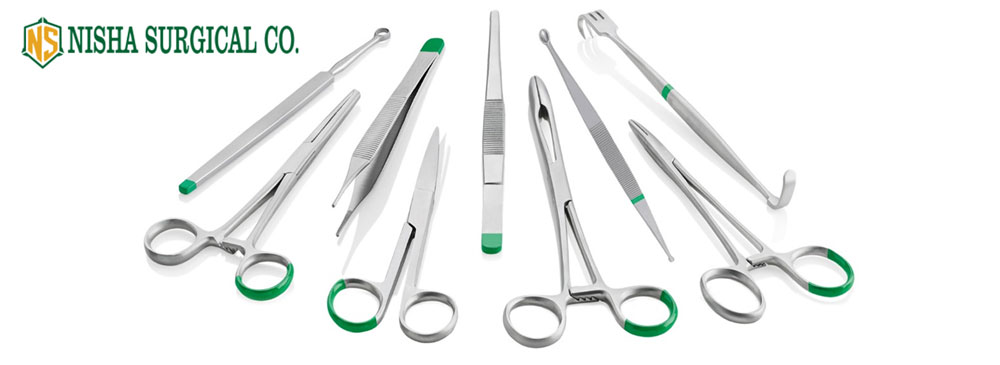
he healthcare industry continuously requires reliable products that support hygiene, operational efficiency, and consistent performance. Hospitals, clinics, surgical centers, and healthcare procurement organizations depend on properly manufactured products that meet their intended applications and quality requirements. Among these products, Single-Use Medical Metallic Instruments represent an important category for healthcare suppliers, importers, wholesalers, and international distributors.
Single-use metallic instruments are designed and labelled for one-time use. They combine metallic construction with product-specific designs to meet particular handling, cutting, grasping, and procedural requirements. Depending on the intended application, the product range may include scissors, forceps, needle holders, retractors, and other specialized metallic products.
For international buyers, selecting the right manufacturer involves more than comparing prices. Material specifications, product dimensions, finishing, packaging, manufacturing consistency, and regulatory documentation all contribute to a successful purchasing decision.
Nisha Surgical Co., based in Sialkot, Pakistan, focuses on manufacturing and exporting surgical, dental, and beauty instruments for international markets. We understand the importance of product specifications, professional communication, and customer-specific manufacturing requirements.
Our objective is to support wholesalers, importers, distributors, and private-label businesses seeking dependable manufacturing and export partnerships.
In this article, we explore the product range, material considerations, manufacturing specifications, quality requirements, and purchasing factors associated with Single-Use Medical Metallic Instruments.
What Are Single-Use Medical Metallic Instruments?
Single-Use Medical Metallic Instruments are metallic products specifically designed and labelled by their manufacturers for one-time use according to their intended purpose and instructions.
Unlike reusable products, which are designed for repeated use after appropriate cleaning, inspection, disinfection, and sterilization, single-use products are not intended to be reprocessed or reused.
These products can be manufactured in different shapes, sizes, and configurations to meet specific requirements.
Common examples include:
- Metallic surgical scissors
- Surgical forceps
- Thumb and dressing forceps
- Needle holders
- Retractors
- Dental examination products
- Procedure-specific metallic accessories
It is important to understand that single-use does not automatically mean sterile. Products may be supplied sterile or non-sterile depending on their intended application, packaging, and validated manufacturing processes.
For importers and distributors, verifying product labelling and documentation is essential before purchasing.
Single-Use Medical Metallic Instruments: Product Range Overview
A diverse product portfolio allows medical supply distributors to serve different customer requirements. The available range depends on the manufacturer’s production capabilities and the intended use of each product.
Nisha Surgical understands the importance of product variety and manufacturing flexibility when supplying international business customers.
The following are examples of metallic instrument categories relevant to single-use product portfolios.
1. Single-Use Metallic Surgical Scissors
Scissors are designed for controlled cutting applications. Their blade geometry, sharpness, alignment, and handle configuration influence their functionality.
Different designs are available for specific requirements.
Common variations include:
- Straight scissors
- Curved scissors
- Sharp-sharp scissors
- Blunt-blunt scissors
- Sharp-blunt scissors
- Specialized cutting scissors
When sourcing Single-Use Medical Metallic Instruments, buyers should pay particular attention to blade alignment, cutting consistency, surface finishing, and material specifications.
Manufacturers should establish appropriate inspection criteria to maintain consistency between production batches.
2. Single-Use Metallic Surgical Forceps
Forceps are designed for grasping, holding, and manipulating materials or tissues according to their intended application.
Different configurations are available depending on the required gripping characteristics and product design.
Important specifications include:
- Jaw configuration
- Tip alignment
- Serration pattern
- Overall length
- Handle design
- Surface finishing
For international distributors, consistent product specifications are particularly important when supplying customers with recurring purchasing requirements.
3. Single-Use Thumb and Dressing Forceps
Thumb and dressing forceps feature two connected arms that allow controlled opening and closing.
They are commonly associated with dressing-related and general handling applications.
Available designs may include:
- Straight thumb forceps
- Curved thumb forceps
- Serrated-tip forceps
- Smooth-tip forceps
- Different length configurations
Buyers should evaluate the alignment of the tips, finishing quality, material composition, and overall manufacturing consistency.
4. Single-Use Metallic Needle Holders
Needle holders are designed to hold and control surgical needles during suturing procedures.
Their construction generally includes finger-ring handles, a working jaw section, and a locking mechanism, depending on the design.
Important purchasing specifications include:
- Overall instrument length
- Jaw configuration
- Gripping surface
- Ratchet mechanism
- Handle construction
- Material grade
- Functional inspection requirements
For Single-Use Medical Metallic Instruments, the intended application and product-specific performance requirements should be established before production.
5. Single-Use Metallic Retractors
Retractors are designed to hold back tissues or other materials to provide access and visibility during particular procedures.
Their design varies according to the intended application.
Common considerations include:
- Blade dimensions
- Handle configuration
- Overall length
- Edge finishing
- Metallic strength
- Surface quality
Distributors should provide product references, drawings, or samples when requesting quotations for specialized designs.
6. Single-Use Dental Examination Products
Dental examination products can also form part of a metallic single-use product range.
Depending on the intended use and manufacturer’s product portfolio, these may include:
- Dental mirrors
- Dental probes
- Dental tweezers
- Examination accessories
For dental distributors, product dimensions, finishing, packaging, and material documentation are important considerations.
7. Procedure-Specific Metallic Instrument Sets
Some healthcare buyers prefer purchasing products as organized sets rather than individual instruments.
Depending on the manufacturer’s capabilities, metallic instruments may be supplied in customized product combinations.
Possible configurations include:
- Procedure-specific instrument sets
- Examination sets
- Dressing-related sets
- Customer-specific product combinations
The components, quantities, packaging, and intended use should be confirmed before manufacturing.
Key Material Considerations for Single-Use Medical Metallic Instruments
Material selection directly influences the manufacturing quality and functional characteristics of metallic instruments.
For international buyers, understanding the material grade is important when comparing different suppliers.
Stainless Steel
Stainless steel is widely used in metallic instrument manufacturing because of its useful mechanical properties and corrosion resistance.
Different grades have different compositions and characteristics. The appropriate selection depends on the product design and intended application.
Important material properties include:
- Corrosion resistance
- Mechanical strength
- Hardness
- Formability
- Surface finishing compatibility
- Manufacturing performance
A professional supplier should be able to clarify the material specifications used for individual products.
AISI 420 Stainless Steel
AISI 420 is a martensitic stainless steel commonly used in applications requiring hardness and wear resistance.
Its properties can make it suitable for certain metallic components, particularly products where cutting characteristics and edge retention are important.
However, its performance depends on the material composition, heat treatment, manufacturing process, and final surface condition.
Buyers requiring a specific material grade should request relevant material specifications and supporting documentation.
Material Traceability
Material traceability helps businesses maintain purchasing records and verify that supplied products meet agreed specifications.
For wholesale and export orders, buyers may request:
- Material grade information
- Material test documentation
- Supplier specifications
- Batch identification
- Quality inspection records
These details can help importers establish stronger quality control procedures throughout their supply chains.
Important Product Specifications and Manufacturing Requirements
When purchasing Single-Use Medical Metallic Instruments, buyers should consider technical specifications rather than relying only on photographs or product descriptions.
Clearly defined requirements help manufacturers understand customer expectations and reduce production misunderstandings.
1. Product Dimensions and Design
Product dimensions influence suitability for the intended application.
Depending on the instrument, specifications may include:
- Overall length
- Working length
- Blade length
- Jaw dimensions
- Tip configuration
- Handle dimensions
- Product weight
International buyers should provide technical drawings, catalogue references, photographs, or physical samples whenever possible.
2. Surface Finishing and Appearance
Surface finishing contributes to the appearance and quality of metallic products.
Depending on the design, different finishing options may be available.
These can include:
- Satin finish
- Matte finish
- Polished finish
- Special surface treatments
The selected finishing process should be appropriate for the material and intended product application.
3. Functional Inspection
Functional inspection helps confirm that products meet established manufacturing specifications.
Depending on the product category, inspection may cover:
- Blade alignment
- Cutting performance
- Jaw alignment
- Opening and closing movement
- Locking mechanism
- Dimensional accuracy
- Surface defects
Inspection requirements should be established according to the design and intended application.
4. Packaging Specifications
Packaging is an important part of product protection, storage, and transportation.
For Single-Use Medical Metallic Instruments, packaging requirements should be established according to the product’s intended use and sterility status.
Possible packaging configurations include:
- Individual packaging
- Protective pouches
- Product trays
- Custom-labelled packaging
- Bulk export cartons
For sterile products, the sterile barrier packaging system must be appropriately validated and maintained throughout the product’s specified shelf life.
5. Product Labelling and Identification
Proper product identification supports inventory management and traceability.
Depending on applicable regulations, product labelling may include:
- Product name
- Catalogue number
- Manufacturer details
- Batch or lot number
- Manufacturing information
- Expiry date, where applicable
- Sterility status, where applicable
- Single-use identification
- Storage instructions
- Regulatory information
Importers should confirm destination-market labelling requirements before approving production.
Single-Use vhttps://nishasurgical.com/disposable-male-circumcision-kits/s. Reusable Medical Metallic Instruments
Understanding the differences between single-use and reusable products helps healthcare procurement professionals make informed purchasing decisions.
Both categories have different manufacturing, handling, and operational requirements.
Single-Use Products
Single-use products are specifically designed and labelled for one-time use.
Their main characteristics include:
- One-time-use designation
- Product-specific packaging
- Clear identification and labelling
- Defined disposal requirements
- No routine reprocessing for reuse
Whether the product is supplied sterile or non-sterile must be confirmed through its labelling and documentation.
Reusable Products
Reusable instruments are designed for repeated use when processed according to the manufacturer’s validated instructions.
They generally require:
- Cleaning and decontamination
- Inspection and maintenance
- Appropriate sterilization
- Suitable storage
- Monitoring of product condition
The purchasing decision depends on operational requirements, intended application, procurement policies, and applicable regulations.
Advantages and Purchasing Considerations of Single-Use Medical Metallic Instruments
The use of Single-Use Medical Metallic Instruments can offer several operational considerations for healthcare facilities and medical distributors.
1. Simplified Reprocessing Workflow
Because single-use products are not intended for reuse, they do not require the same routine reprocessing workflow as reusable products.
Healthcare facilities must still follow appropriate handling and disposal procedures.
2. Product-Specific Hygiene Management
Single-use products can support infection prevention procedures when manufactured, packaged, stored, and used according to their intended purpose.
However, buyers should never assume that every single-use product is sterile.
Sterility information should always be confirmed before procurement.
3. Convenient Inventory Planning
Single-use products can be purchased according to expected consumption and procedural requirements.
For wholesalers and distributors, this can help organize stock levels and plan recurring orders.
4. Product Identification
Clear labelling and product identification help procurement departments maintain inventory records and track products.
Batch information and appropriate documentation are particularly useful for international supply chains.
5. Wholesale Purchasing Opportunities
For international distributors, purchasing suitable quantities from a manufacturing partner can support product availability and business planning.
However, buyers should compare total purchasing costs, including packaging, shipping, customs, and applicable regulatory expenses.
Quality Assurance in Single-Use Medical Metallic Instruments Manufacturing
Quality assurance is an essential part of manufacturing metallic healthcare products.
International buyers expect suppliers to understand product specifications and maintain appropriate production and inspection controls.
At Nisha Surgical, we recognize the importance of manufacturing consistency and professional communication.
A structured quality approach may include the following stages.
Raw Material Inspection
Materials should be evaluated against approved specifications before production.
Manufacturing Process Control
Production should follow established procedures and approved product requirements.
Dimensional Inspection
Important dimensions should be checked against drawings, samples, or technical specifications.
Functional Inspection
Relevant product characteristics should be evaluated according to the instrument category.
Final Product Inspection
Finished products should be examined for workmanship, surface condition, appearance, and agreed specifications.
Documentation and Traceability
Appropriate production and inspection records should be maintained according to applicable requirements.
For sterile single-use products, additional controls may include sterilization process validation, sterile barrier packaging validation, and shelf-life validation.
Buyers should request relevant supporting documentation before accepting claims about sterility, certification, or regulatory compliance.
OEM and Private Label Manufacturing Opportunities
International medical supply businesses often require products that reflect their own brand identity.
OEM and private-label manufacturing can provide opportunities for distributors to develop customized product portfolios.
Nisha Surgical welcomes discussions with international customers interested in product-specific manufacturing arrangements.
Depending on the product and manufacturing capabilities, customization may include:
- Customer-specific product dimensions
- Design specifications
- Material requirements
- Surface finishing
- Product identification
- Catalogue references
- Custom packaging
- Private-label branding
For successful OEM cooperation, buyers should provide clear specifications and approve samples where required.
Manufacturing schedules, minimum order quantities, pricing, and packaging requirements should be agreed upon before production begins.
Why Choose Nisha Surgical Co. for Metallic Instrument Manufacturing?
Nisha Surgical Co. is based in Sialkot, Pakistan, a recognized manufacturing center for metallic instruments.
We focus on manufacturing and exporting surgical, dental, and beauty instruments for international business customers.
We understand that wholesalers, importers, and distributors need reliable communication, clear product specifications, and professional export support.
Our approach focuses on understanding customer requirements and discussing suitable manufacturing solutions.
Manufacturing and Product Knowledge
Understanding product design, materials, finishing, and manufacturing requirements is important when supplying international customers.
Customer-Specific Solutions
Different distributors have different purchasing requirements. We welcome enquiries involving product specifications, dimensions, finishing, and packaging.
OEM and Private Label Options
We welcome discussions about customized product development and private-label arrangements, subject to product availability and manufacturing capabilities.
Wholesale and Bulk Enquiries
International wholesalers and importers can contact our team to discuss product quantities, quotations, and order requirements.
International Export Support
We aim to maintain clear communication throughout the enquiry, quotation, order confirmation, packaging, and shipping process.
Our goal is to develop professional business relationships with international buyers looking for long-term manufacturing cooperation.
How International Buyers Can Select the Right Supplier
Choosing a suitable supplier for Single-Use Medical Metallic Instruments requires careful evaluation.
Here are some practical steps for importers and distributors.
1. Review Product Specifications
Check the material, dimensions, design, finishing, and intended application.
2. Request Samples
Where practical, request samples to evaluate workmanship and product specifications before placing a large order.
3. Verify Documentation
Ask for relevant material specifications, inspection records, manufacturing information, and regulatory documents.
4. Confirm Sterility Requirements
Clearly establish whether products are sterile or non-sterile.
For sterile products, request evidence of appropriate sterilization and packaging validation.
5. Discuss Production and Delivery Times
Confirm minimum order quantities, estimated production schedules, packaging arrangements, and shipping terms.
6. Check Destination-Market Regulations
Medical product requirements vary between countries.
Importers should verify applicable product classification, registration, conformity assessment, labelling, and import requirements in their destination markets.
For example, requirements may differ between the United States, United Kingdom, European Union, and other international markets.
Working with a supplier that understands the importance of product documentation can make procurement more organized.
Global Wholesale Opportunities for Single-Use Medical Metallic Instruments
International healthcare supply chains create opportunities for manufacturers, wholesalers, and distributors.
Medical supply businesses require products that meet customer specifications and applicable market requirements.
For importers, sourcing from established manufacturing regions can provide opportunities to expand their product portfolios.
Sialkot, Pakistan, has a long-standing presence in the metallic instrument manufacturing industry.
For businesses purchasing Single-Use Medical Metallic Instruments, important considerations include:
- Consistent product specifications
- Suitable material selection
- Manufacturing quality controls
- Appropriate packaging
- Regulatory documentation
- Competitive and transparent quotations
- Reliable export communication
Building a successful international supply relationship requires more than an attractive price. Product suitability, documented quality, and professional cooperation are equally important.
Frequently Asked Questions About Single-Use Medical Metallic Instruments
1. What are Single-Use Medical Metallic Instruments?
Single-Use Medical Metallic Instruments are metallic products designed and labelled for one-time use according to their intended purpose. Depending on the product range, they may include scissors, forceps, needle holders, retractors, and other specialized products. They must not be reused or reprocessed contrary to the manufacturer’s instructions.
2. Which materials are used to manufacture Single-Use Medical Metallic Instruments?
Stainless steel is commonly used because of its mechanical properties and corrosion resistance. Different grades, including AISI 420, may be suitable for particular product designs. The final material selection depends on the intended application, required mechanical properties, manufacturing process, and product specifications.
3. Are Single-Use Medical Metallic Instruments supplied sterile?
They can be supplied sterile or non-sterile depending on the product design, intended application, and manufacturer’s specifications. Buyers should verify the product label, packaging, and sterilization documentation before purchasing. Single-use designation alone does not guarantee sterility.
4. Does Nisha Surgical offer OEM and wholesale manufacturing services?
Nisha Surgical welcomes enquiries from international wholesalers, importers, and distributors interested in manufacturing cooperation, customized product specifications, OEM arrangements, and bulk purchasing. Product availability, minimum order quantities, packaging, and production schedules can be discussed with our sales team.
Conclusion: Your Manufacturing Partner for Metallic Instruments
The healthcare industry requires products that meet defined specifications, manufacturing requirements, and applicable regulatory standards.
Single-Use Medical Metallic Instruments represent an important product category for international healthcare suppliers, distributors, and procurement businesses.
Successful purchasing decisions depend on material selection, product design, manufacturing consistency, packaging, documentation, and reliable communication.
At Nisha Surgical Co., we welcome international business enquiries for surgical, dental, and beauty instruments. Our focus is to understand customer requirements and develop professional manufacturing and export relationships.
Whether you are a wholesaler, importer, distributor, or private-label business, our team welcomes the opportunity to discuss your requirements.
Contact Nisha Surgical Co. Today
Are you looking for a manufacturing partner for metallic instruments, OEM production, or wholesale supply?
Contact Nisha Surgical to discuss your requirements and request a quotation.
Company: Nisha Surgical Co.
Location: Sialkot, Pakistan
Website: www.nishasurgical.com
Email: info@nishasurgical.com
Nisha Surgical Co. – Your Partner for Professional Instrument Manufacturing and International Supply.
#SingleUseMedicalMetallicInstruments #SingleUseInstruments #DisposableMedicalInstruments #MedicalMetallicInstruments #SurgicalInstruments #SurgicalInstrumentsManufacturer #SurgicalInstrumentsSupplier #SurgicalInstrumentsExporter #MedicalInstrumentManufacturer #MedicalInstrumentSupplier #StainlessSteelInstruments #MedicalEquipmentSupplier #SurgicalInstrumentsPakistan #SialkotSurgicalIndustry #NishaSurgical #OEMManufacturing #MedicalWholesale #MedicalDistributors #HealthcareSupplies #MedicalExporters #SurgicalManufacturing #InternationalMedicalTrade #WholesaleInstruments #PakistanManufacturers #MedicalIndustry